+86-21-20919968


Blueprint is a type of engineering drawing reproduction made through a specific photochemical process. Its most classic and traditional feature is the image of white lines on a blue background. Before the widespread adoption of computer-aided design and digital printing technologies, it served as the standard medium for distributing and archiving design drawings in global engineering, architecture, and manufacturing. Today, the term "blueprint" has evolved into a general metaphor referring to any final plan or detailed design scheme.
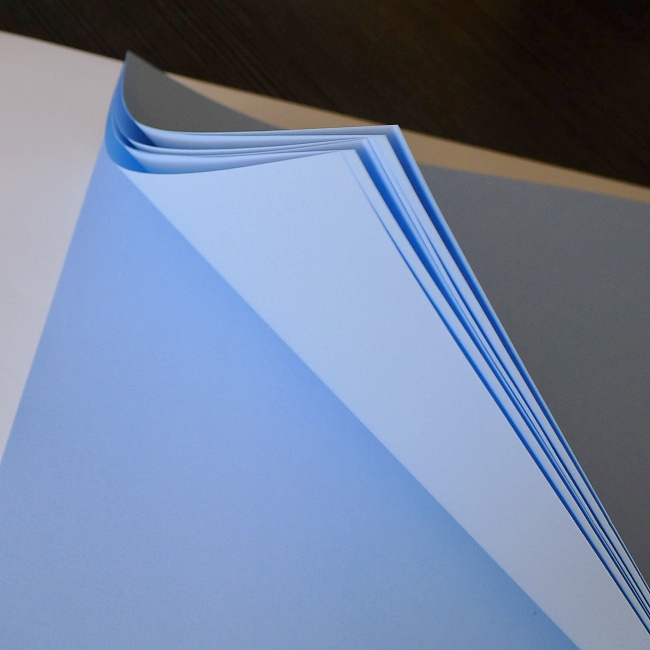
Materials and Process of Blue Print Paper
The core of traditional blueprint production lies in photosensitive paper and transparent original drawings.
The main components of the photosensitive coating are two iron salts: ammonium ferricyanide and potassium ferrocyanide. Ammonium ferricyanide acts as the photosensitive agent, as it is sensitive to ultraviolet light, while potassium ferrocyanide serves as the color-developing agent. When aqueous solutions of these two compounds are mixed in proportion and applied to the paper surface, a light yellow-green photosensitive layer forms upon drying. Durable, water-resistant paper is used as the carrier for the coating.
The transparent original drawing refers to manually drawn line drawings on semi-transparent media (such as tracing paper or polyester film), where the inked lines are opaque.
The process employs the cyanotype printing method, known as "blueprinting," which is a contact printing technique.
Contact and Exposure: The photosensitive paper (with the coated side facing up) is tightly adhered to the transparent original drawing (with the inked side facing down), then clamped in a glass blueprinting frame and exposed to strong ultraviolet light (initially sunlight, later using blueprinting machines).
Photochemical Reaction: Ultraviolet light penetrates the blank areas of the original drawing, causing a photoreduction reaction in the photosensitive coating below. The trivalent iron ions in ammonium ferricyanide are reduced to divalent iron ions, while the areas covered by the inked lines of the original drawing remain unaffected.
Washing and Development: After exposure, the drawing is rinsed in clear water. In the exposed areas, the generated divalent iron ions react with potassium ferrocyanide to form insoluble Prussian blue precipitates, resulting in the blue background. The unexposed areas (corresponding to the original drawing lines) have their chemicals washed away, revealing the white paper base.
Drying: Once dried, the washed drawing yields the final white-line blue-background blueprint.
By the mid-20th century, more efficient diazo blueprinting methods gradually became mainstream, but the product was still commonly referred to as a "blueprint.".
Characteristics of blueprints
Advantages:
High-precision replication: capable of accurately replicating all details of the original image in a 1:1 ratio.
Low cost: The per-unit reproduction cost is extremely low, making it suitable for mass production.
Image Durability: Prussian blue exhibits exceptional chemical stability, with finished products being highly light-resistant and resistant to fading, allowing for long-term preservation (decades to over a century).
High contrast: The blue background and white lines create a sharp contrast, ensuring clear and easy readability under any lighting conditions.
Tamper-resistant: The drawings are the result of an overall chemical reaction, making localized modifications extremely difficult, which helps ensure document security.
Disadvantages:
Unidirectional process: Only allows copying from the original drawing to the blueprint, but not from the blueprint to another blueprint.
Complex process: Relies on chemical processes, requiring exposure, washing/fumigation, and drying, resulting in low efficiency.
Environmental pollution: involves the use of chemical agents and wastewater discharge.
Dependence on the original manuscript: The quality and transparency of the original image directly affect the final product's outcome.
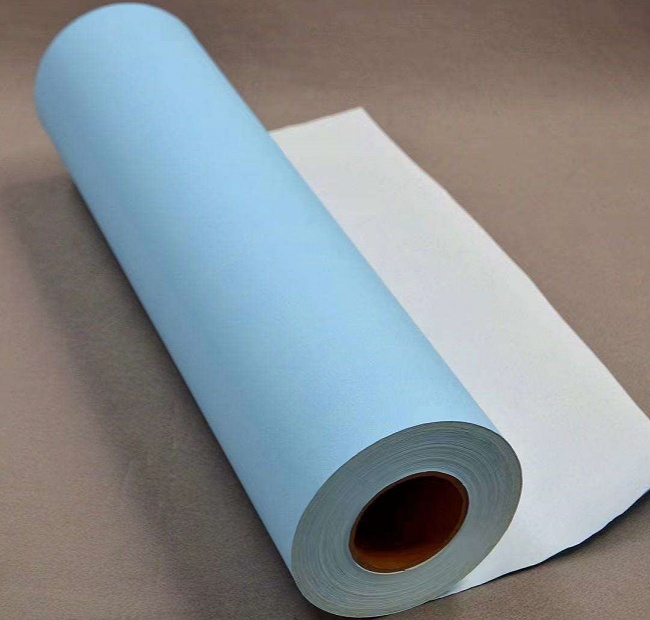
The useage of Blue Print Paper
Before digital technology, blueprints served as the "lifeblood" of nearly all heavy industry and technical fields.
Construction Engineering: Used for replicating and distributing architectural drawings, structural drawings, electrical layouts, piping diagrams, and other documents to contractors and construction teams.
Mechanical Manufacturing: Used for replicating part drawings, assembly drawings, and process flowcharts to guide workshop production and quality control.
Civil and Electrical Engineering: For the design and construction of roads, bridges, dams, and power systems.
Ships and Aerospace: Used for replicating complex ship and aircraft design drawings.
Artistic Creation: Its craft (cyanotype photography) is employed by artists to produce photographic works and artistic images with unique aesthetic appeal.
Since the 1980s and 1990s, with the maturation of CAD software, large-format inkjet/laser plotters, and digital printing technologies, the traditional chemical blueprinting process has been largely phased out. Modern "plotting" is now directly printed on white paper, featuring diverse line colors (black, blue, red, etc.).
Although its physical form has faded from history, the cultural symbol of the "blueprint" as an "ultimate plan" remains deeply ingrained in people's minds. It represents an era of meticulous engineering, large-scale manufacturing, and industrial collaboration, and its legacy continues to shape our language and way of thinking today.