+86-21-20919968


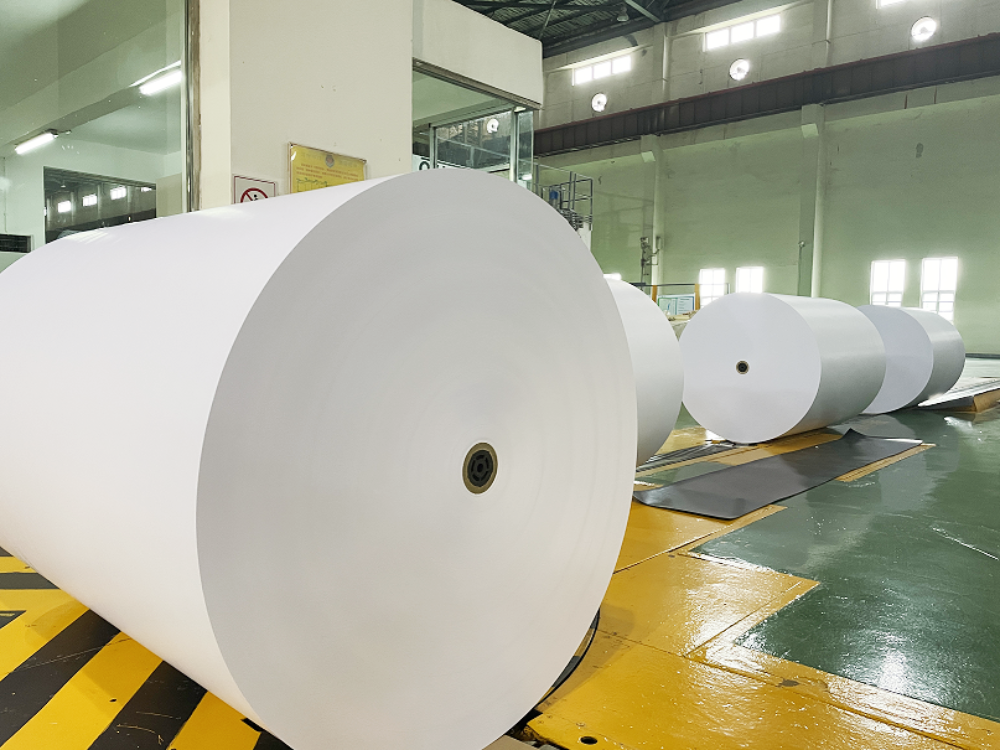
Stone paper, also known as stone paper, is a new environmentally friendly material that lies between paper and plastic. It mainly uses calcium carbonate ore powder as the main raw material, with a content of usually 60% to 80%, supplemented by 15% to 30% of high molecular weight polymers (such as polyethylene or high-density polyethylene), which are mixed, kneaded, granulated, and then made into sheet materials through processes such as blow molding or rolling. The entire production process involves physical changes, does not involve chemical reactions, does not cut down trees, and does not require washing with water. Therefore, no wastewater, waste residue, or toxic and harmful gases are discharged.
According to different thicknesses and uses, stone paper can be divided into three categories: thin paper (RPD), with a thickness of 80 microns to 180 microns and a weight of about 100 to 220 grams per square meter, suitable for printing, labeling, notebooks, etc; Thick paper (RBD), with a thickness of 200 microns to 800 microns and a weight of approximately 280 to 560 grams per square meter, suitable for business cards, paper boxes, handbags, etc; Thick sheet metal (STN), similar to vacuum formed material, suitable for lunch boxes, plates, etc.
Characteristic
Stone paper has outstanding physical properties. It is waterproof and moisture-proof, and will not be damaged even when immersed in water; Resistant to tearing and folding, with good toughness, not easily torn, and will not break even after repeated folding; It is also resistant to oil, mold, and decay, making it very suitable for long-term storage. In addition, stone paper has good flame retardancy and is not easy to burn. Even if it burns, only white calcium carbonate powder remains, without producing black smoke or toxic gas. Its surface is smooth, ink absorption is firm, printing clarity is high, and inkjet printing accuracy can reach 2880dpi. Because there are no fibers, there will be no color cast.
Green environmental protection is another core characteristic of stone paper. It replaces wood with ore, saving 200000 trees of wood for every 10000 tons of stone paper produced; The production process does not use a single drop of water and does not discharge industrial wastewater; No chemical bleaching is required, and strong acids, alkalis, bleaching agents, and fluorescent agents are not used, so it does not contain harmful substances such as formaldehyde and benzene. Stone paper can naturally degrade, starting to degrade after about 3 months under sunlight, completely degrading after being buried underground for about 1 year, and ultimately transforming into harmless calcium carbonate powder. If sent to an incinerator for incineration, it will not produce black smoke or toxic gas, and the carbon dioxide emissions will be reduced by 67% compared to traditional papermaking processes.
The safety of stone paper is also very high. It is non-toxic and odorless, and does not contain any harmful substances to the human body. It can directly come into contact with food and medicine. This material has passed multiple international certifications, including EU food grade standards, US FDA food contact material standards, as well as REACH, RoHS, and others.
Technical Parameters
In terms of technical parameters, there are slight differences among different manufacturers and product lines. Usually, the whiteness is about 78% to 80%, similar to traditional plant fiber paper but slightly lower than copperplate paper. In terms of thickness, thin paper ranges from 80 to 180 microns, thick paper ranges from 200 to 800 microns, and the weight varies from 120 grams per square meter to 560 grams per square meter. Common specifications include 120 grams, 280 grams, 350 grams, 420 grams, 490 grams, 560 grams, etc. The density of stone paper is about 1.4 grams per cubic centimeter, and it has better stiffness at the same thickness. Due to the absence of plant fibers and production without water involvement, the moisture content of stone paper is almost zero. It has a compressive strength of up to 50 kilograms without deformation, a flame retardant rating of B1, a printing accuracy of 175 lines per inch (offset or gravure printing), and an inkjet printing clarity of 2880 dpi. It should be noted that the above parameters vary depending on the product series of different manufacturers (such as RPD, RBD, STN), and the specific specifications should be based on the product specifications of each manufacturer. At the same time, the quality of stone paper is also divided into superior, first-class, and qualified products according to local standards.
Intended use
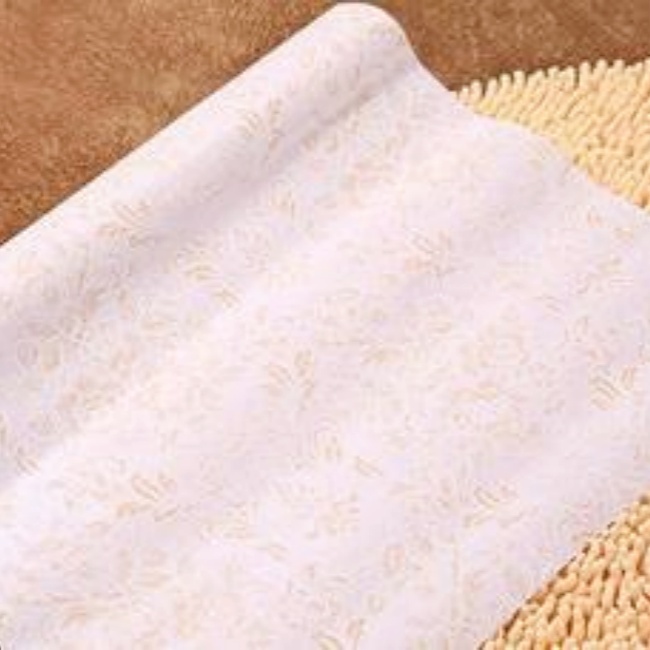
The use of stone paper is very extensive, covering multiple fields such as civilian, commercial, industrial, and military. In terms of packaging materials, it can be used for garbage bags, shopping bags, food bags, drug packaging, cosmetics packaging, fertilizer bags, cement bags, rice and flour bags, as well as paper boxes and cartons. In terms of cultural printing, it can be used for notebooks, sticky notes, instruction manuals, picture books, books, magazines, posters, maps, calendars, etc. In terms of building materials decoration, stone paper wallpaper is currently an environmentally friendly wallpaper product on the market that is close to zero benzene and zero formaldehyde. In addition, it has many special uses, including underwater operation paper, field operation paper, mining operation paper, military special paper, as well as in mold labels, pressure-sensitive labels, thermal sensitive labels, adhesive labels, frozen food packaging, cold chain logistics packaging, business cards, cards, hang tags, paper fans, umbrellas, travel paper caps, etc.
In summary, stone paper is a new type of material that combines the writing and printing properties of paper with the physical properties of plastic. It has significant comprehensive advantages in waterproofing, tear resistance, and environmental degradation. Its cost is also 10% to 20% lower than traditional paper, and it has certain market competitiveness. However, it should be pointed out that there is still a certain gap in the smoothness and glossiness of stone paper compared to traditional copperplate paper, and the technology for continuous production of large widths is constantly improving and perfecting.