+86-21-20919968


Film-based adhesive stickers are self-adhesive label materials made from thin films, offering excellent physical properties and durability. With unique material properties, they are widely used in various fields such as personal care, food, medical industry, and electronic products. Compared to traditional paper labels, film labels offer advantages such as waterproof, oilproof, high-temperature tolerance, and tear resistance, meeting the demands of various harsh environments.
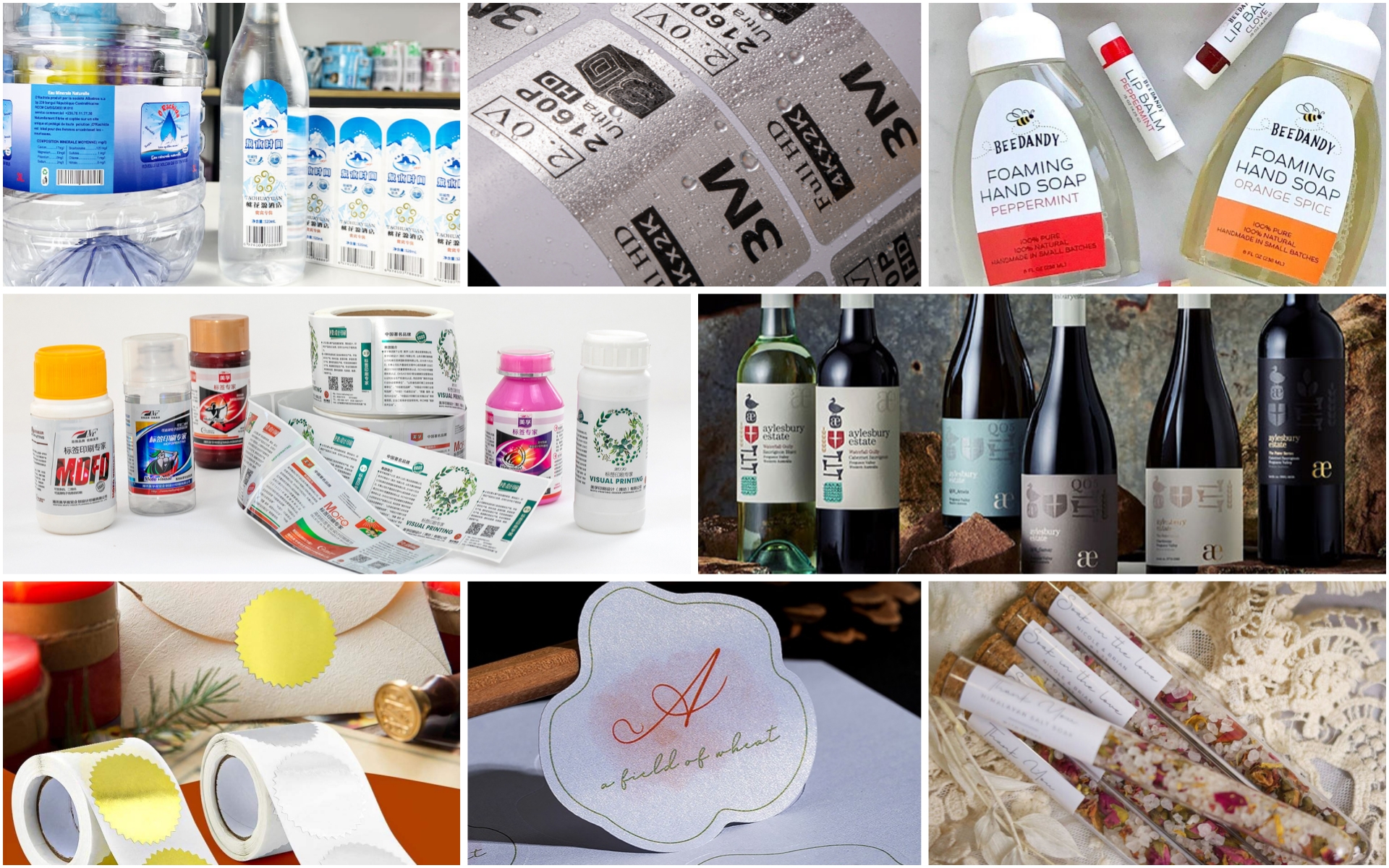
Introduction of Slef-Adhesive Labels
Self-adhesive labels are roughly two types: paper-based adhesive labels, and film-based adhesive labels.
1. PP (polypropylene) Self-adhesive Labels
PP film is a non-polar polymer material, enabling PP self-adhesive labels to feature diverse finishes including matt synthetic film, glossy film, holographic BOPP, gloss silver BOPP, and transparent BOPP
Features:
Lightweight and eco-friendly surface material,
Waterproof and moisture-resistant
Excellent stiffness and strong tear resistance
Resistant to deformation and good printability
Superior color reproduction
Temperature tolerance range: Moderate temperature resistance; short-term tolerance from -40°C to 120°C, long-term tolerance from -20°C to 80°C. Resistant to brittleness in low temperatures; may undergo slight deformation in high temperatures.
Environmental Advantages: 100% recyclable and reusable; no toxic gases emitted during incineration.
Applications:
Suitable for label scenarios that require shape stability, such as daily chemical product labels (e.g. detergents, laundry detergent), promotional labels, temporary signs, commercial advertisements, medical labels, etc.
2.PET (Polyester) Self-adhesive Labels
PET film, the English abbreviation for polyester film, is a polymer material. Common types include transparent, matt transparent, glossy white, matt white, glossy silver matt silver, glossy gold, brushed silver and brushed gold options.
Features:
Excellent heat resistance, suitable for labels requiring heat treatment.
Strong oil resistance and scratch resistance, ideal for high-demand industrial environments.
Resistant to various chemicals, applicable for chemical product labels.
Additional properties include waterproof and moisture-proof, tear resistance, wear resistance, high printing precision, low shrinkage and expansion rate, long-term outdoor durability, and strength surpasses PP.
Temperature Resistance Range: -20℃ to +120℃ (short-term resistance up to 150℃).
Applications:
Widely used in pharmaceuticals, food, beverages, stationery, and other sectors, as well as for high-quality labeling in electronics (e.g., mobile phone batteries, circuit boards), home appliances, automotive components, and chemical industries. Transparent PET achieves a “no-label” visual effect, while coated substrates serve as anti-counterfeiting labels for high-end goods.
3.PE (Polyethylene) Self-adhesive Labels
PE film is polymerized from ethylene, presenting a surface in various finishes, including glossy white, matt white, and transparent.
Features:
Excellent flexibility and stretchability, along with waterproof and oil-resistant properties, making it suitable for curved surface adhesion.
maintains soft and chemically stable in low-temperature environments, ideal for outdoor or low-temperature scenarios.
Outstanding oil resistance and compression resistance, meeting the needs for frequent contact with grease or pressure-bearing applications.
Temperature Resistance Range: It excels in low-temperature tolerance, with short-term resistance from -40°C to 100°C and long-term adaptability from -20°C to 80°C. It is suitable for freezing scenarios but has weaker high-temperature stability compared to PP film sticker.
Applications:
Used for daily necessities such as shower gel and shampoo bottles, as well as flexible curved surfaces like cosmetic tubes. It is also applicable to frozen food packaging, outdoor waterproof labels, and industrial chemical labeling
4. Aluminum Foil Self-adhesive Labels
Aluminum foil adhesive labels use aluminum foil as the base material, featuring both metallic texture and barrier properties (moisture-proof, oxygen-proof, and light-shielding). Their performance can be further enhanced by laminating with films such as PE or PET. Common surface materials include options like glossy silver, matt silver, glossy gold, and matte gold.
Features:
Metallic texture: Surface exhibits metallic luster for a premium appearance.
Anti-counterfeiting performance: The unique metallic texture can be used to create anti-counterfeiting labels, enhancing product security.
Excellent light-shielding, moisture resistance, and barrier properties against oxygen and light, withstanding temperatures above 200°C.
Limitations:The cost is relatively high, and the texture is relatively brittle, making it unsuitable for curved surface pasting.
Applications:
Suitable for high-end information labels on pharmaceuticals, food products, daily necessities (e.g., tea packaging), and cultural goods, as well as packaging for high-end
5. Artistic Paper Self-adhesive Labels
Artistic paper belongs to special paper-based face stock, featuring unique texture patterns and vintage aesthetic. It combines good printability and certain stiffness of paper. Common types include fluorescent paper, pearlescent paper, embossed paper, specialty paper, and more.
Features:
Made from wood pulp, the surface can undergo processes like embossing, hot stamping, and UV coating.
Features a refined texture, high color fidelity, distinctive grain patterns, and combines vintage aesthetics with eco-friendly properties
With stable adhesion, tight bonding, delivering a retro-elegant visual impact.
Applications:
Widely used in red wine, tea, premium cosmetics, gift boxes, cultural products, etc., effectively enhancing brand image and product added value.
The structure of self-adhesive labels consists of three main parts: face materials, adhesive, and backing liner. These layers work together to determine the label's performance and applicable scenarios.
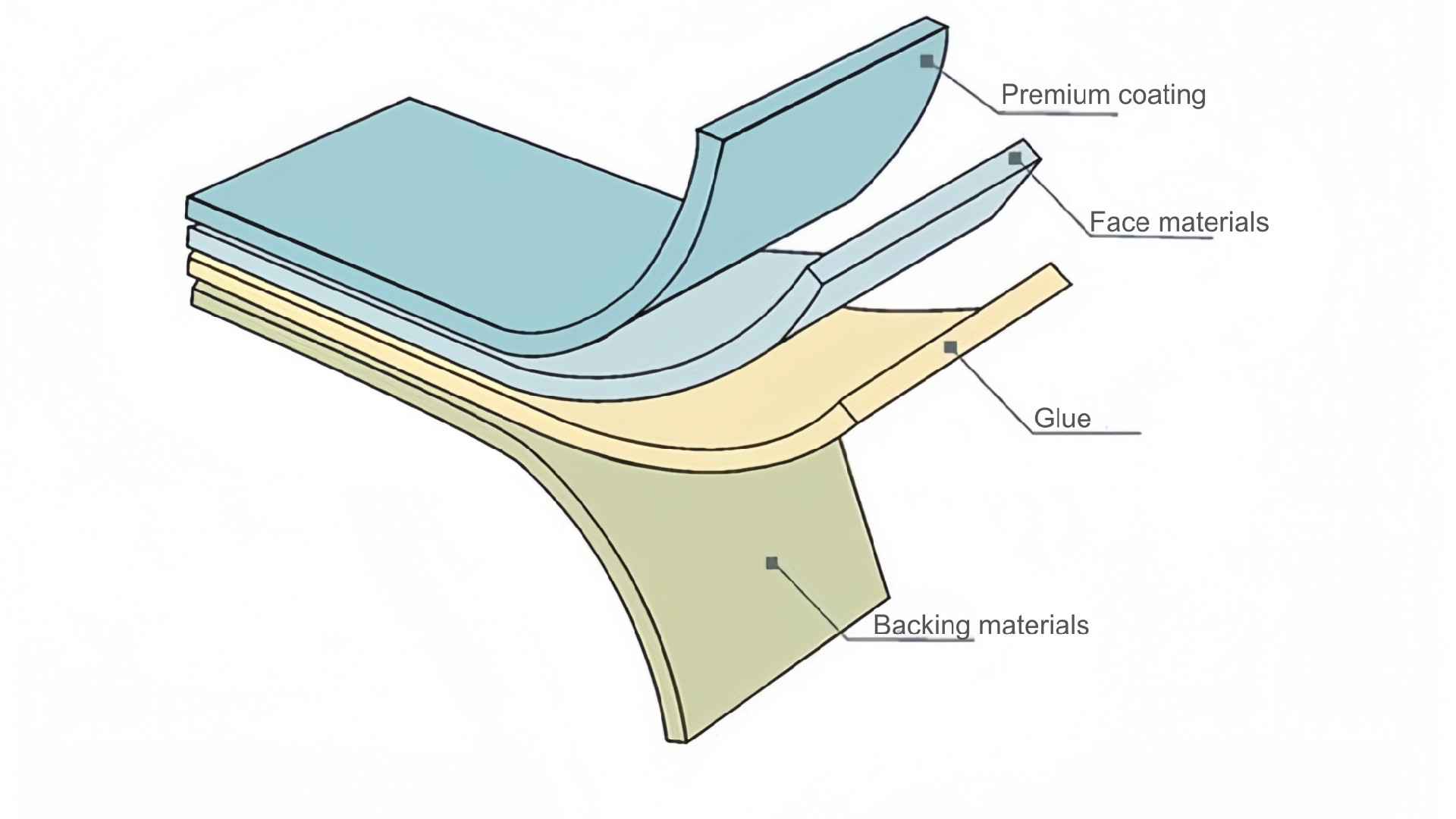
The face paper is the primary carrier of label content, determining the label's appearance and performance. It needs to have good ink receptivity and be able to withstand processing steps such as die-cutting, slitting, punching, and labeling. Surface gloss, color consistency, and density uniformity directly impact the ink absorption uniformity and color variation in printed labels. Different face paper materials have distinct physical and chemical properties. For example, PP film is lightweight and waterproof, PE film is soft and water-resistant, and PET film is high-temperature resistant and waterproof, providing diverse options for label applications.
Common materials include PP/ PE/PET film, aluminum foil paper , and artistic paper.
The characteristics of different surface materials are as follows:
PE/PP/PET Film (thickness: 19-300μm): Excellent physical properties and weather resistance.
Aluminum foil paper (grammage: 60-150gsm): Metallic texture and barrier properties.
Artistic paper (grammage: 60-150gsm): Unique texture and eco-friendly properties
Glue, serving as a connecting component between face materials and backing materials, is a key element in label application technology. Based on its characteristics, it can be categorized into three types: permanent, removable, and temperature-resistant, with flexible formulations that can be selected according to different surface materials and usage scenarios.
Permanent Glue:It has strong and long-lasting adhesion, making it difficult to peel off after curing. Suitable for labels requiring long-term fixation, such as electronic devices and medical equipment, it typically achieves durability through high-cohesion resin formulations.
Removable Glue: By adjusting the molecular weight distribution of the adhesive or adding microsphere structures , it achieves low adhesion and residue-free removal. Ideal for temporary identification on smooth surfaces like glass and plastic (e.g., promotional labels, exhibition signs).
Temperature-resistant Glue:By incorporating high-temperature-resistant resins (e.g., silicone, polyimide) or low-temperature plasticizers, it can withstand extreme temperatures ranging from -40℃ to 200℃. Widely used in cold chain logistics labels (e.g., frozen food labels) and kitchen appliance labels (e.g., oven, microwave labels).
The function of backing materials is to protect and support the face material, requiring uniform thickness and strength. It is mainly used to receive release agent coating, thereby protecting the adhesive on the back of the face material while supporting the face material to ensure smooth die-cutting, and labeling processes. Common backing materials include transparent PET liner, glassine paper, art release paper, kraft release paper, and white/yellow release paper. The selection of backing material should comprehensively consider compatibility with the face materials and glue, as well as the processing and labeling requirements of the label.
Transparent PET Liner: High flatness and moisture resistance, making them suitable for high-speed printing and automatic labeling machines;
Flat-back adhesive allows for easy inspection of bonding status, but doesn't support back printing and is temperature-sensitive.
Paper-based Release Liner: Renowned for surface flatness and excellent dimensional stability, they provide stable support and easy peeling;
Suitable for manual labeling or low-speed production lines and can meet general labeling needs.
Example of sticker label products:
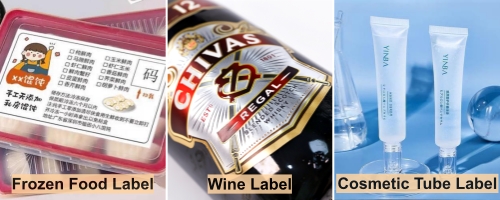
1. 75mic matte white PP film freezer adhesive 60gsm white glassine liner
Low-temperature resistant, waterproof, oil-resistant, and highly adhesive. Suitable for frozen foods packaging
2. 80gsm Bright Silver Aluminum Foil Paper Acrylic Adhesive 60gsm White Glassine Liner
High wet strength and waterproof. Suitable for wine label and beer label
3. 80mic Transparent PE film Acrylic Adhesive 60gsm White Glassine Liner
Transparent surface, water resistance and moisture proof. Suitable for cosmetic tubes
Film self-adhesive labels have been widely used in daily chemicals, food, medical, industrial, electronic and other fields due to their diverse face materials, flexible glue control technology and suitable backing paper selection. When purchasing, the following principles can be followed: choose materials according to the environment, PE or PET is suitable for humid environments, PET or aluminum foil paper for high-temperature environments, and PP or PET with UV resistance for outdoor environments;choose materials according to the functions, PE is suitable for curved surface pasting scenarios, art paper for high-end appearance effects, and aluminum foil paper for strong barrier properties; choose materials according to the budget, PP or PE can be used for batch general labels, while PET, aluminum foil paper or art paper can be used for high-end scenarios.
Each material has its unique advantages and applicable scenarios. When purchasing, it is necessary to comprehensively consider the environmental requirements of the application scenario, printing process and environmental protection standards, so as to give full play to the information transmission and brand value-added role of labels. With the continuous advancement of technology, the application range and performance of film self-adhesive labels will be further expanded and improved, providing more innovative solutions for various