+86-21-20919968


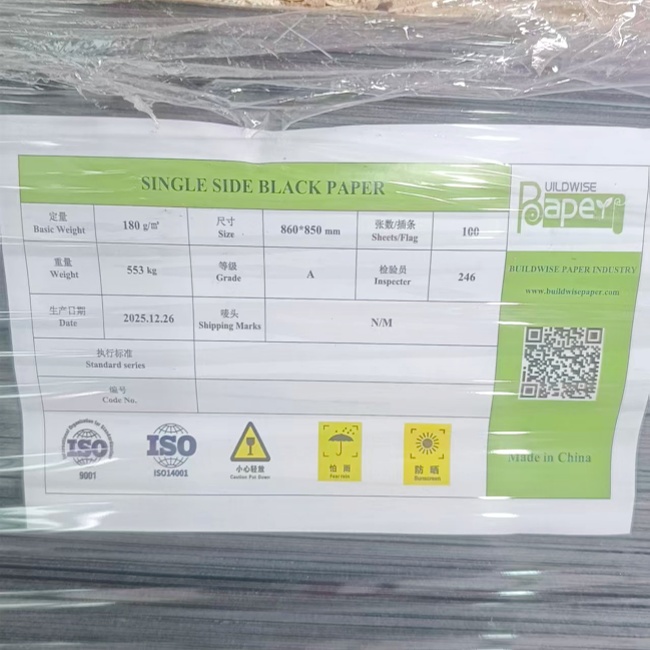
Black Paper is a common type of specialty paper, typically in pure or dark black with subtle textures or finishes such as gloss or matte. It is primarily made from wood pulp or cotton pulp, featuring a smooth or slightly textured surface and a firm texture. The weight range is 80-500gsm, with standard sizes including A4,700*1000mm, 889*1194mm, and more, available in both flat sheets and rolls.
Key Features
High contrast: A black background can strongly highlight other colors (such as metallic, fluorescent, or foil stamping effects).
Light-blocking property: Complete light blocking, suitable for applications requiring light exclusion (such as photo album pages and packaging boxes).
Good stiffness: Resistant to deformation, suitable for creating three-dimensional structures or items with high load-bearing requirements.
Processability: Easy to undergo post-processing techniques such as cutting, embossing, hot stamping, UV printing, and screen printing.
There are four common types of black cardboard, specifically:
Single-sided black paper: one side is black, while the other is white or gray, suitable for designs requiring different colors on both sides.
Double-sided black paper: Both sides are black, commonly used for high-end packaging or displays.
Texture Black Paper: Features special textures such as fine lines, fabric patterns, and leather grain on the surface.
Eco-Friendly Black Paper: Made from recycled pulp or paper certified by sustainable forestry.
Black Paper has a wide range of applications. In packaging design, it can be used to create luxury boxes, gift boxes, wine labels, and electronic product packaging. In the field of artistic creation, it serves as a sketch background, silhouette art, handmade cards, and photo album pages. It is also suitable for high-end printing products such as business cards, invitations, book covers, and menus. Additionally, it can be utilized for display purposes, including exhibition backboards, store signage, and promotional card stands. Finally, it is employed in model making, primarily for architectural models, stage props, and handmade model substrates.
How to Save and Use
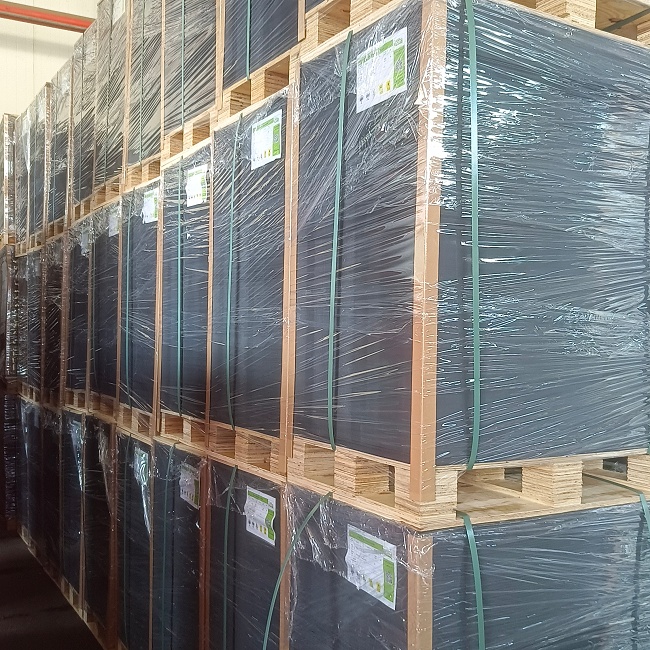
Moisture-proof: Store in a dry environment to prevent deformation due to dampness.
To avoid scratches: The surface is prone to scratches, so wearing gloves is recommended during operation.
Cutting tool: Use a sharp blade or laser cutting to ensure smooth edges.
Overall, the greatest advantage of black paper lies in its deep and pure black background, making it the perfect stage for post-processing techniques. When processes such as gold stamping, silver stamping, embossing, UV coating, and laser engraving are applied, the effects are exceptionally dazzling and luxurious due to the strong contrast. Therefore, it is not primarily used as a "canvas" for color printing but rather as a "substrate" for creating three-dimensional texture, light and shadow contrast, and tactile experiences. With its powerful visual impact, excellent adaptability to craftsmanship, and structural stability, black paper has become a crucial material in high-end design and handmade creations. Whether for commercial packaging or artistic expression, it conveys texture and depth through minimalist black.