+86-21-20919968


Understanding the Meaning of Offset Paper Offset paper is a type of cultural printing paper that has undergone 'sizing' treatment on both sides during the paper making process. The 'sizing' does not involve applying adhesive glue but rather adding specific chemical additives (such as starch or polymers) to the pulp or paper surface, which greatly improves the physical properties and print ability of the paper.
It is currently one of the most widely used and fundamental types of paper in the fields of books, textbooks, office supplies, and cultural products. It is favored for its balanced performance and moderate price. In the publishing and printing industry, it is usually referred to as 'Dao lin paper,' while in office settings, it is commonly called 'copy paper' or 'printing paper.'
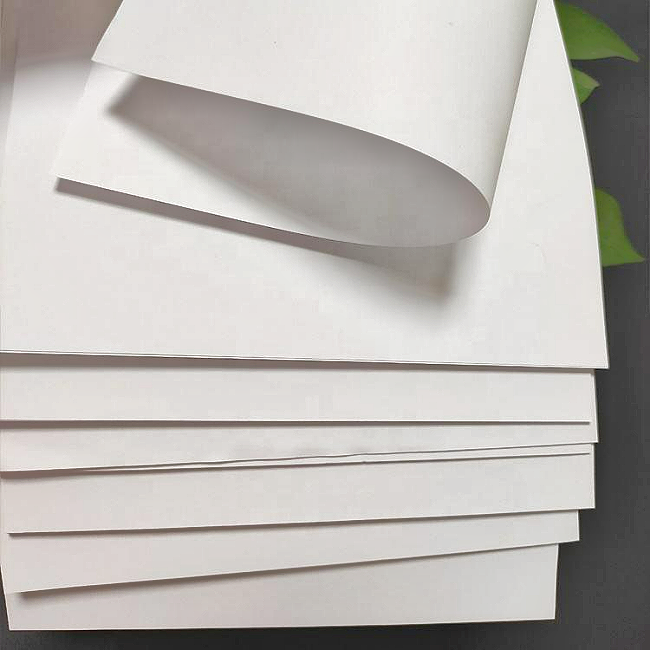
Understanding the Composition and Process of Offset Paper
Its main raw materials depend on its grade and purpose, typically consisting of the following: Wood pulp is the main fiber source for offset paper, and it comes in three types: chemical pulp, mechanical pulp, and commercial pulp. Chemical pulp is mainly produced by chemically removing lignin. This type of pulp has high fiber purity, good strength, a white color that does not easily yellow, and is often used for high-grade offset paper, such as for premium book pages. Mechanical pulp is mechanically ground, retaining lignin, with a high yield and low cost, but paper made from it tends to yellow and become brittle, usually used for newsprint or low-grade offset paper. Commercial pulp is purchased finished pulp sheets from the market; it has stable quality and serves as the main raw material for many paper mills.
In addition, some auxiliary materials need to be added, including fillers, sizing agents, brightening agents, and additives. Fillers like calcium carbonate, talc, and kaolin are used to fill spaces between fibers, improving paper opacity, smoothness, and whiteness, while enhancing print ability. Sizing agents are key to producing offset paper, improving water resistance and preventing ink bleed during writing, as well as aiding in printing. Brightening agents are mainly used to adjust the paper's hue and whiteness for a better appearance. Additives such as strength enhancers and retention aids are used to improve the physical strength of the paper and production efficiency.
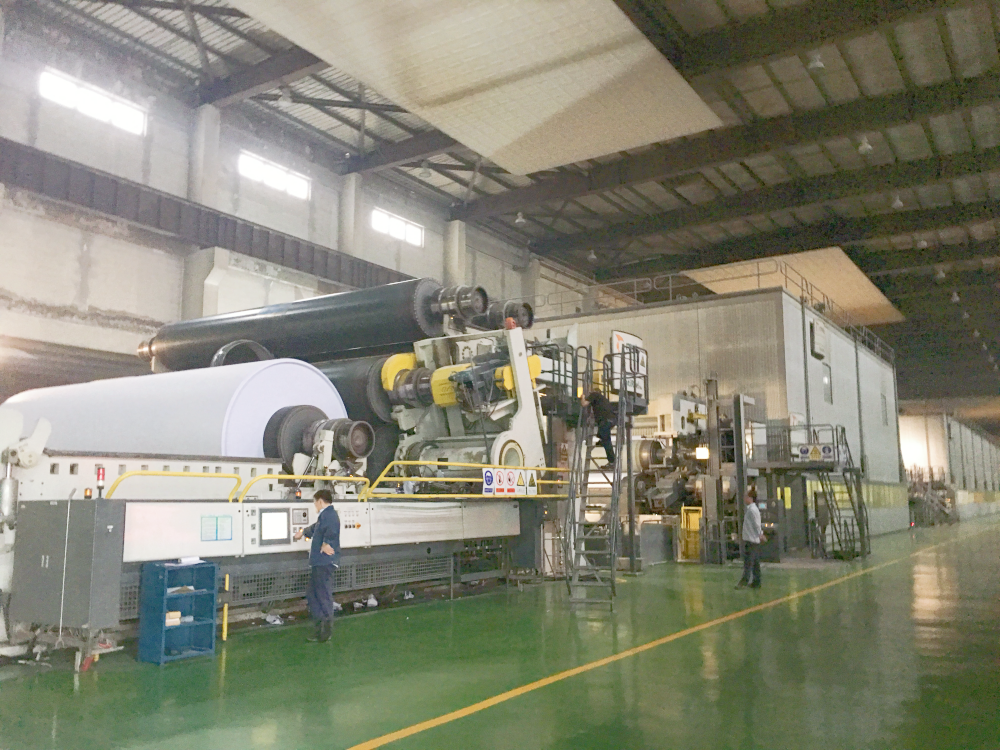
The production of offset paper mainly follows the process of pulping,forming,finishing, with the core being 'sizing' and 'coating.'
Pulp Preparation: Wood pulp sheets are broken down and mixed with filler, sizing agents, and coloring agents in precise proportions to create a uniform pulp slurry. Forming: The pulp slurry is evenly sprayed onto a fast-moving forming wire (long wire or twin-wire) where most of the water is removed by gravity and vacuum suction, forming wet paper sheets.
Pressing and Dehydration: Wet sheets are mechanically dehydrated by press rollers, increasing sheet density and strength. Pre-drying: Sheets enter the drying section, where remaining water is evaporated by heated drying cylinders.
Surface Sizing (Key Step): After preliminary drying, the specially prepared sizing solution is evenly applied to both sides of the paper with a sizing machine (e.g., size press or film size press). This is the crucial step that gives 'offset paper' its name.
Post-drying: After sizing, the paper enters the drying cylinders again to allow the sizing to cure and adhere to the paper surface.
Calendering and finishing: The dried paper passes through a calender machine. The calender consists of a series of cold cast iron rollers, and the paper is pressed through them to achieve higher smoothness, gloss, and uniform thickness.
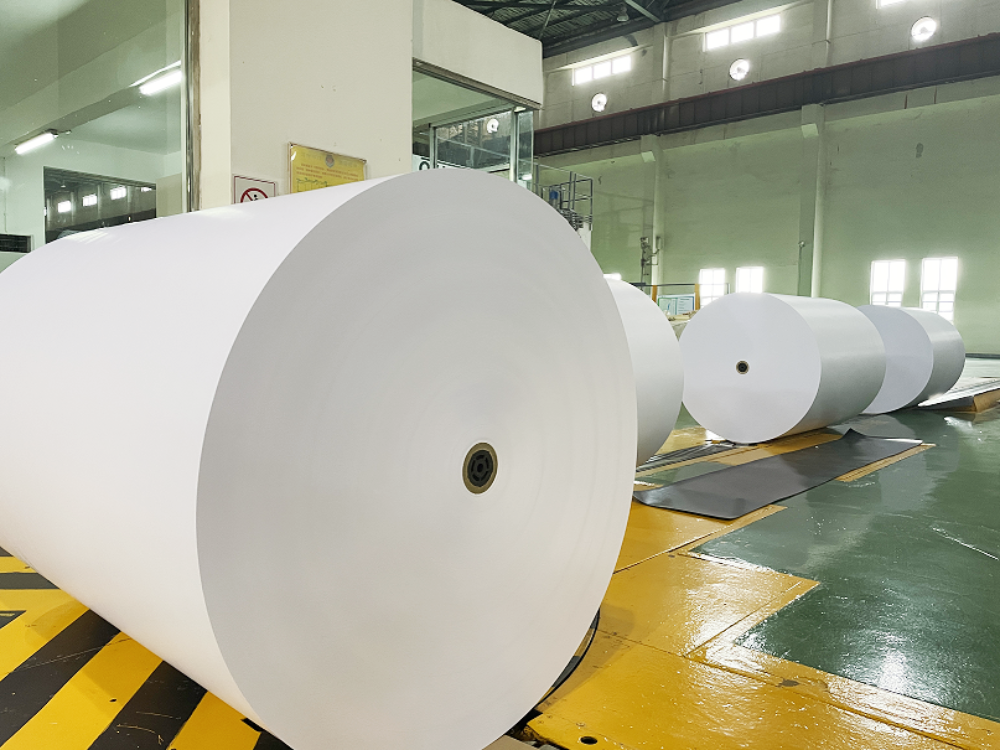
Roll-up and cutting: Finally, the large paper rolls are wound up and then cut into different sizes of sheets or rolls according to customer requirements.
Thanks to the double-sided sizing process, double-coated paper has the following characteristics.
High strength: The fiber bonding is strong, with high tensile and surface strength, making it resistant to breaking, dusting, or fuzzing during high-speed printing.
Good print suitability: The surface is smooth and delicate, with uniform ink absorption. Images are clear and color reproduction is high after printing, with minimal show-through.
Excellent writing performance: Due to sizing, the paper has some water resistance, and ink from fountain pens or ballpoint pens does not easily bleed.
Uniform texture: Thickness, density, and moisture are evenly distributed across the paper sheet, ensuring stable printing and usage.
High cost-performance ratio: Compared with coated paper, it has lower production costs, a wide range of uses, and is an extremely cost-effective paper for office and printing purposes.
Environmentally friendly options: Many double-coated papers on the market use renewable wood pulp or contain a certain proportion of recycled fibers.
Suitable Printing Methods for Woodfree Paper
The most mainstream and suitable method is offset printing, which utilizes the principle that oil and water do not mix. The image and text areas are oil-affinitive and water-repellent, while non-image text areas are water-affinitive and oil-repellent. The image and text on the printing plate are first transferred to a rubber blanket, and then the rubber blanket presses them onto the paper. This printing method can perfectly reproduce the texture and feel of woodfree paper, with clear and sharp printed text, and rich and vibrant color layers for images. The elasticity of the rubber blanket compensates for minor unevenness in the paper, ensuring uniform and consistent ink coverage. It is especially suitable for the most common high-volume printing needs of woodfree paper, such as books and manuals.
Additionally, digital printing is very common and efficient. This printing method does not require a printing plate and directly outputs digital image and text information to the paper via a computer. This method primarily includes laser printing and inkjet printing. Laser printing mainly uses toner (dry ink powder) which adheres to the paper through electrostatic and heat fusing; while inkjet printing sprays tiny droplets of ink onto the paper surface. However, it should be noted that different types of woodfree paper will yield different results with inkjet printing. Ordinary woodfree paper can be used for text and simple graphics, but for high-quality color images, the paper’s excessive ink absorption may result in dull colors and bleeding. There are specially coated woodfree papers optimized for inkjet printing, which absorb ink quickly and prevent spreading, achieving photo-quality printing results. Therefore, attention should be paid to the paper specifications when performing inkjet printing.
Due to its excellent comprehensive performance, double-coated paper has a very wide range of applications, covering almost all cultural, office, and commercial printing fields, including the following types.
Books and magazines: Commonly used for the inner pages of textbooks, novels, academic monographs, journals, and magazines.
Office documents: Used as copy paper or printing paper for reports, contracts, letters, forms, etc.
Commercial printing: Used for brochures, product catalogs, corporate annual reports, instruction manuals, sticky notes, advertising flyers, etc.Stationery products: Used for notebooks, diaries, envelopes, document bags, etc.
Others: Can also be used for instruction sheets for food and medicine packaging or ordinary packaging bags.

In summary, double-coated paper is a balanced-performance cultural printing paper treated with a double-sided sizing technique. It is primarily made from wood pulp, featuring high strength, good print suitability, and ink-resistant writing. It is an ideal choice for making books, magazines, and office documents, and is ubiquitous in our daily study and work.