+86-21-20919968


Parchment is an ambiguous concept that refers to both an ancient writing material and a modern industrial paper. Simply put, the term 'parchment' can refer to 'real parchment' made from animal skins in history, or to 'industrial parchment' made from plant fibers today.
Traditional Parchment
This is a writing material with a long history, made from animal skin through special craftsmanship.
Meaning and History: The English name "Parchment" for parchment comes from the ancient city of Pergamon. Around 170 BC, due to Egypt's cessation of exporting papyrus to Pergamum, the Pergamum people invented parchment as a substitute. In the Middle Ages, it was the primary writing medium in Europe, commonly used for copying religious scriptures and legal documents. Among them, high-quality parchment made from calf leather is called "Vellum".
Raw materials: Mainly made from sheepskin, goat skin or calf leather.
Production process: The production process is tedious and time-consuming.
Skinning: Peel off the skin of animals of appropriate age.
Soaking: Soak the skin in lime water to dissolve the gum inside, remove hair and fat.
Scratching: After removing, use a knife to scrape off any remaining hair and fat, and thin the skin.
Stretch and air dry: Tighten the wet skin onto the wooden frame, stretch it to the extreme, and air dry it.
Polishing: After drying, use tools such as pumice to polish the leather surface to make it smooth and white.
Features:
Excellent texture: Both sides are very smooth and can be used for writing, and the ink is not easy to penetrate.
Strong durability: Its strength and durability far exceed that of papyrus paper
High cost: The production process is time-consuming and labor-intensive, making parchment paper very expensive.
Environmental sensitivity: sensitive to changes in humidity.
Non leather: It does not undergo the "tanning" process of leather production, thus maintaining its water absorbing and easy to write properties.
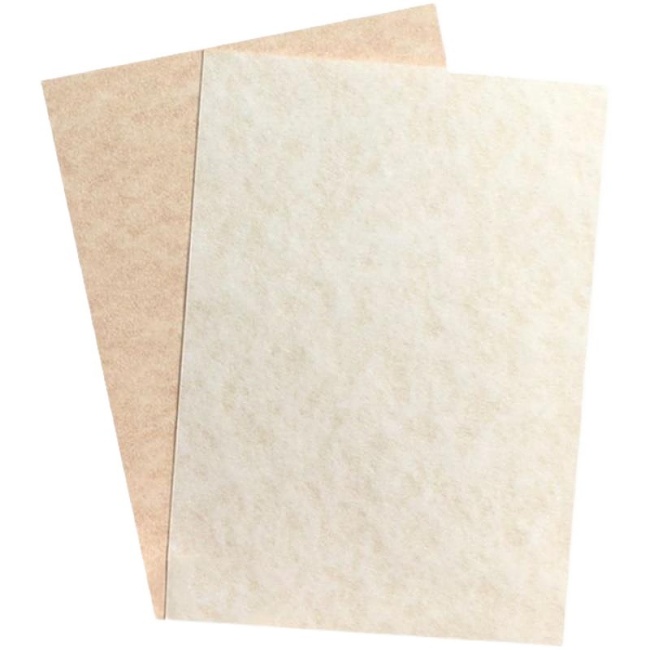
Industrial Parchment Paper (Vegetable Parchment)
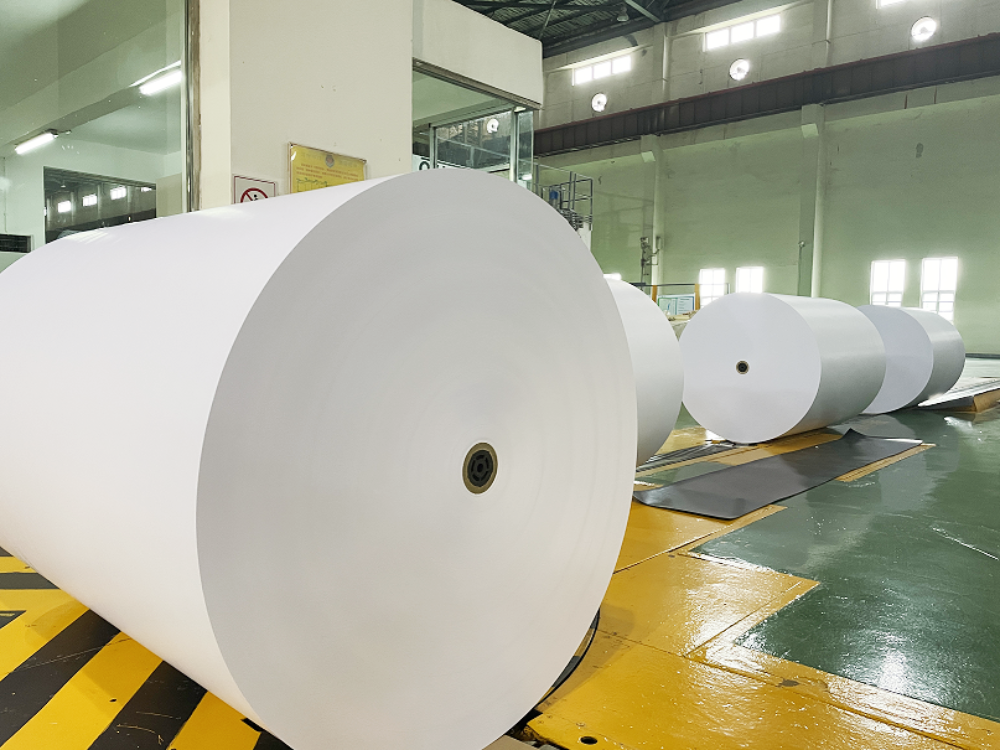
This is a special paper produced by modern industry. Although it has the name "sheepskin", the raw material is plant fiber, which is chemically treated to have characteristics similar to sheepskin. The standard weight is 30-120gsm.
Meaning: Also known as plant parchment, it is a semi transparent packaging paper made by chemical treatment. ’’Parchment paper "also often refers to baking paper.
Raw materials: The main raw materials are chemical wood pulp and rag pulp.
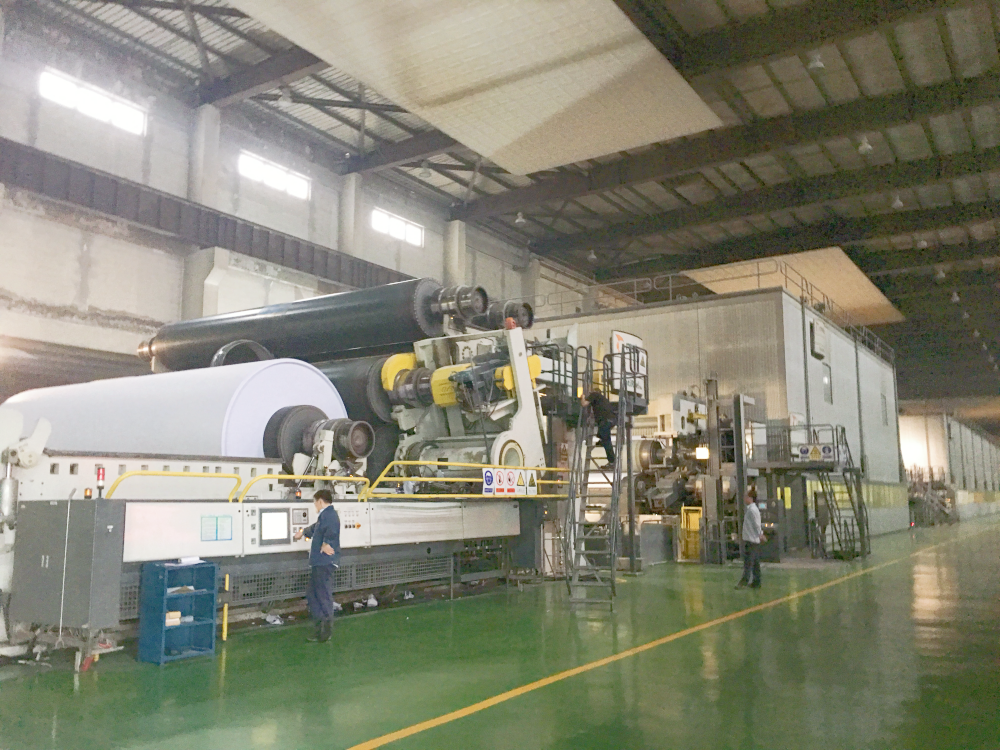
Production process: After making plant fibers into raw paper, they are sent to a 72% concentrated sulfuric acid bath for processing for a few minutes. This process causes the fibers to undergo esterification reaction (also known as "parchment"), thereby changing the properties of the paper.
Features: It has the characteristics of tight structure, waterproof, oil resistant, anti-static, high wet strength, non breathable, and good elasticity.
Main use: Widely used for packaging food, pharmaceuticals, mechanical parts, chemical products, instruments, flowers, etc. Meanwhile, due to its semi transparent texture, it is also commonly used as a tracing paper.
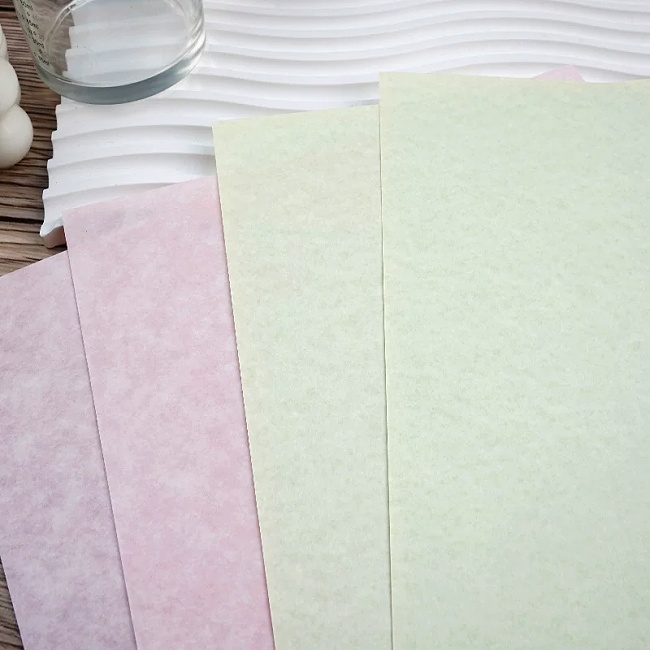
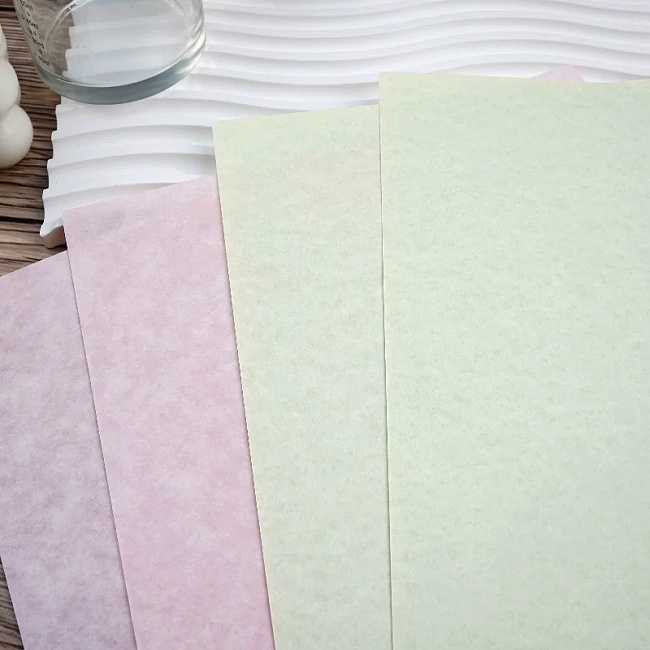
In short,the term 'parchment' encompasses two distinct concepts:
Traditional parchment: It is made of animal skin and is an expensive ancient writing material that is still used for high-end book binding or vintage documents.
Industrial parchment: It is made of plant fibers and is a modern packaging material that is resistant to oil and water. It is widely used in fields such as food and industry.